The Day Indonesia Wears Its Batik
On the second of October, Indonesia dresses in batik. Office workers, schoolchildren, ministers, market traders - across the archipelago, the day is marked the same way: by wearing it. Hari Batik Nasional, National Batik Day, honours the date in 2009 when UNESCO inscribed Indonesian batik on its Representative List of the Intangible Cultural Heritage of Humanity - the world recognising, in its own formal language, the living knowledge Indonesia has carried for centuries.
This year the national celebration gathers in Surabaya, from 30 September to 4 October, with exhibitions, talks and fashion shows, and on the day itself, Batik Berlayar - batik taking to the water in a procession of boats along the Kalimas River. The organisers have been clear about who the week is really for: a younger generation, invited to find their own reasons to love batik, and to carry it forward.
UNESCO's own description of batik reads almost like a family history. The craft, it notes, is often handed down within families for generations, and it accompanies a life from its first day to its last - a sling to carry a newborn, drawn with symbols of good fortune, and a cloth to wrap the body at the end. Every colour and every line holds meaning. Batik lives in the everyday as fully as in ceremony: worn to work, to school, to weddings and to prayer.
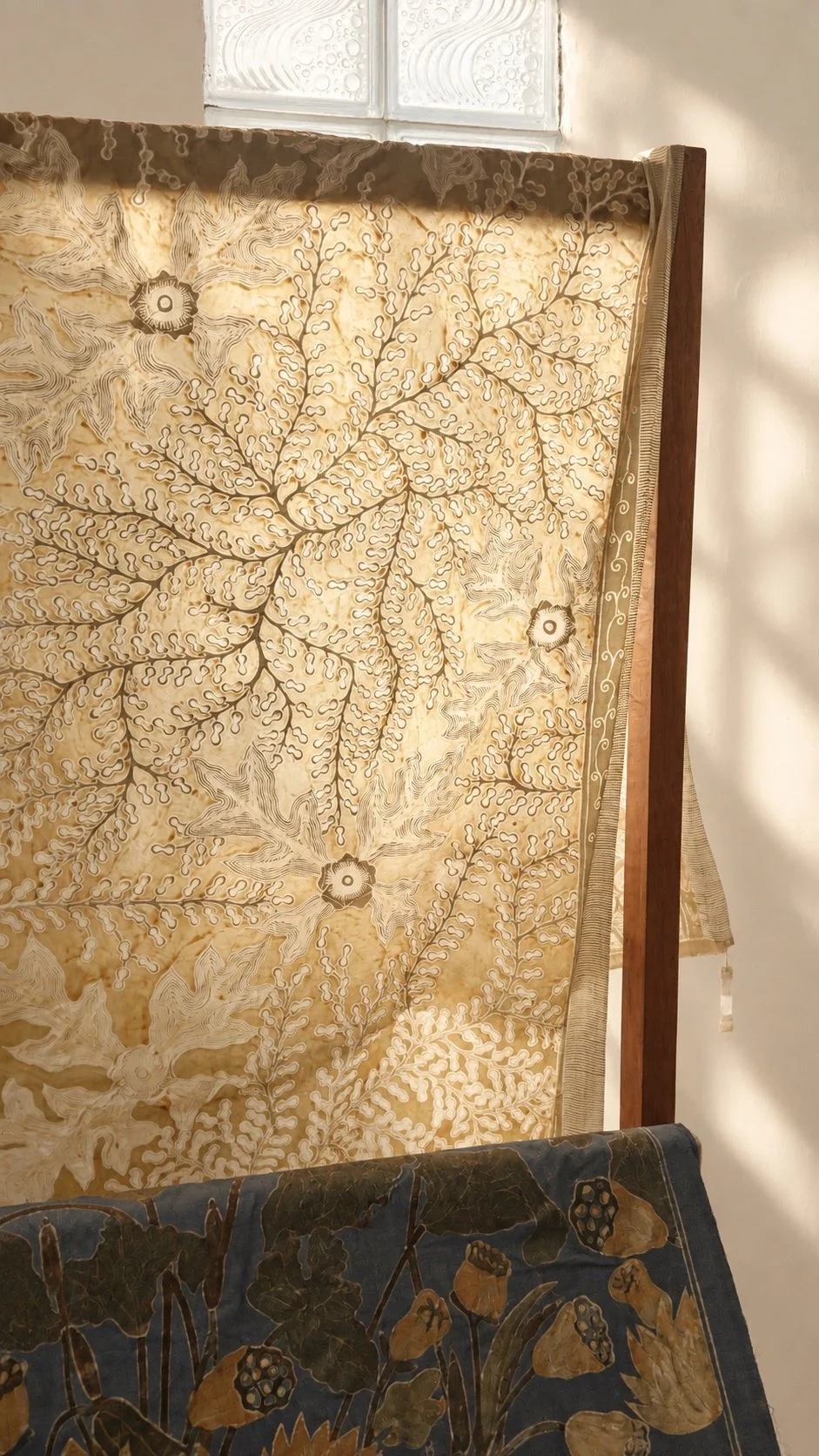
HYPATIA's batik belongs to that same lineage. Every HYPATIA pattern begins as Batik Tulis - from the Javanese tulis, to write, to draw. Bettina's designs are traced line by line in hot wax, malam, using a canting, a small copper-spouted tool held like a pen. The cloth is dyed, the colour sealed beneath fresh wax, and dyed again, colour by colour, until the whole pattern holds. It is the most time-intensive way batik can be made, and the one that keeps a hand present in every line. A hand-drawn line carries the pace and the breath of the person drawing it - a slight shift here, a living irregularity there, a pattern that exists exactly once.
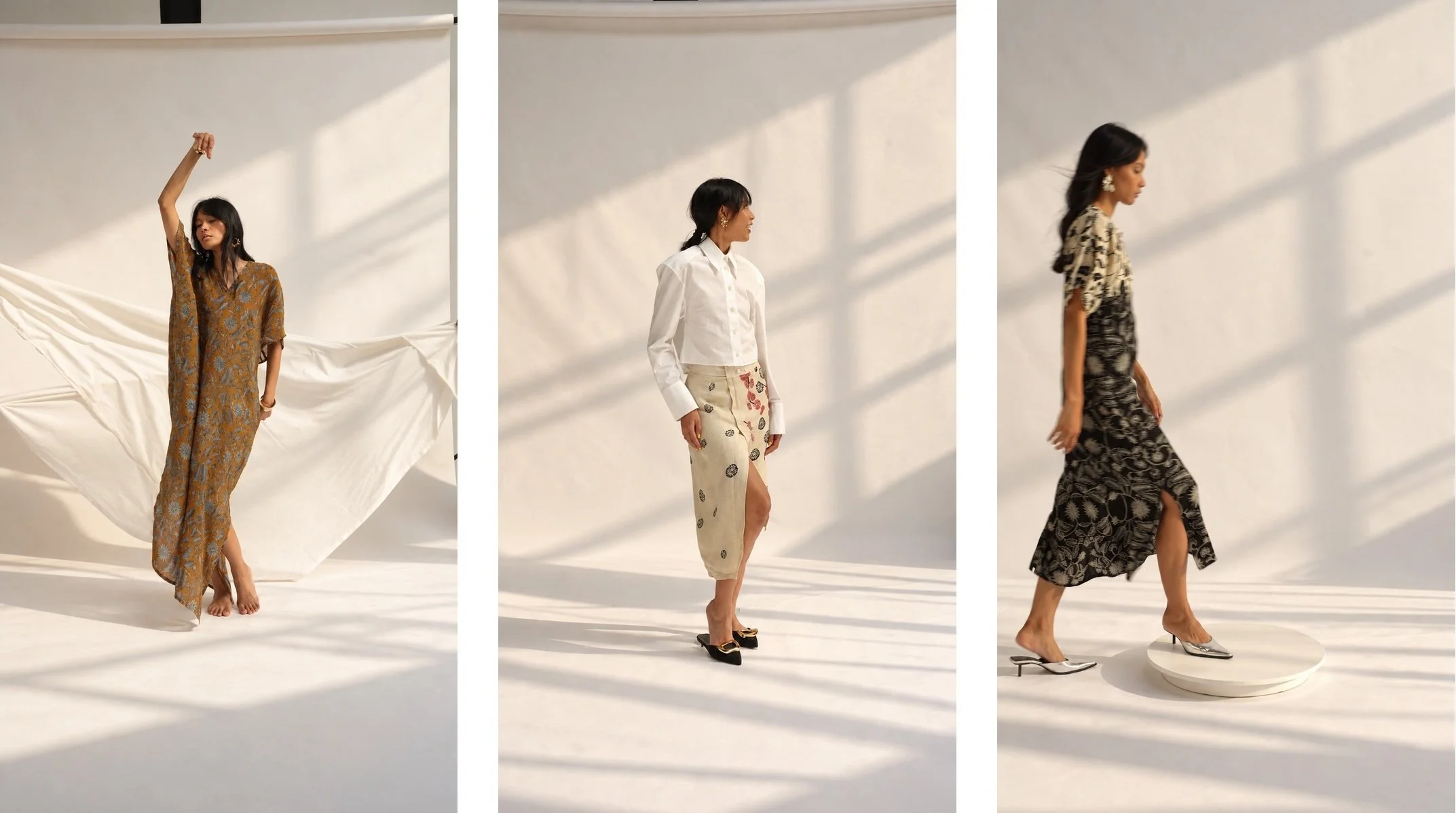
What the day celebrates, in the end, is continuity. A craft the world recognised in 2009 was already centuries old by then, and it continues because people keep choosing it - the artisan who picks up the canting each morning, the young designer who finds something of her own in an old motif, the person who wears a length of hand-drawn cloth and knows how it came to be. This month on the journal we followed that same handoff at the Sulam machine, where Mrs Ecah's son now works beside her. Batik travels the same way: hand to hand, each generation choosing it after the last.
So on the second of October, HYPATIA joins Indonesia in wearing its batik, and in honouring the hands that draw it.
Selamat Hari Batik Nasional.
READ FURTHER
"Indonesian Batik" - UNESCO Intangible Cultural Heritage. https://ich.unesco.org/en/RL/indonesian-batik-00170
"Ekspor Batik Tembus US$20,14 Juta, Kemenperin dan YBI Gelar HBN 2026 di Surabaya" - Industry.co.id. https://www.industry.co.id/read/156279/ekspor-batik-tembus-us2014-juta-kemenperin-dan-ybi-gelar-hbn-2026-di-surabaya
"Young Indonesians Take Their Cultural Heritage Forward on National Batik Day" - United Nations in Indonesia. https://indonesia.un.org/en/151362-young-indonesians-take-their-cultural-heritage-forward-national-batik-day