A Material That Already Existed
This July, in Paris, a couture gown made from lab-fermented spider-silk protein walked a runway for the first time under a new creative director at one of the industry's most closely watched houses. It's a genuine feat of materials engineering — silk proteins grown through fermentation, turned into filament, shaped into something no natural process could produce on its own.
HYPATIA Serat comes from a different starting point entirely.
The Standard Worth Taking Seriously
Matteo Ward, whose work at WRÅD and Inside Out FTH sits at the centre of the same material-innovation conversation HYPATIA is part of, has been direct about where his enthusiasm lies. Materials worth building, in his view, need a reason beyond the fact that they're technically remarkable. It's a pointed thing to say in a moment when several high-profile next-generation materials companies are facing real structural strain, and investor appetite for novelty-first material science has visibly cooled.
The standard he's describing is a demanding one: a material earns its place through purpose, not through spectacle alone.
Where HYPATIA Serat Starts From
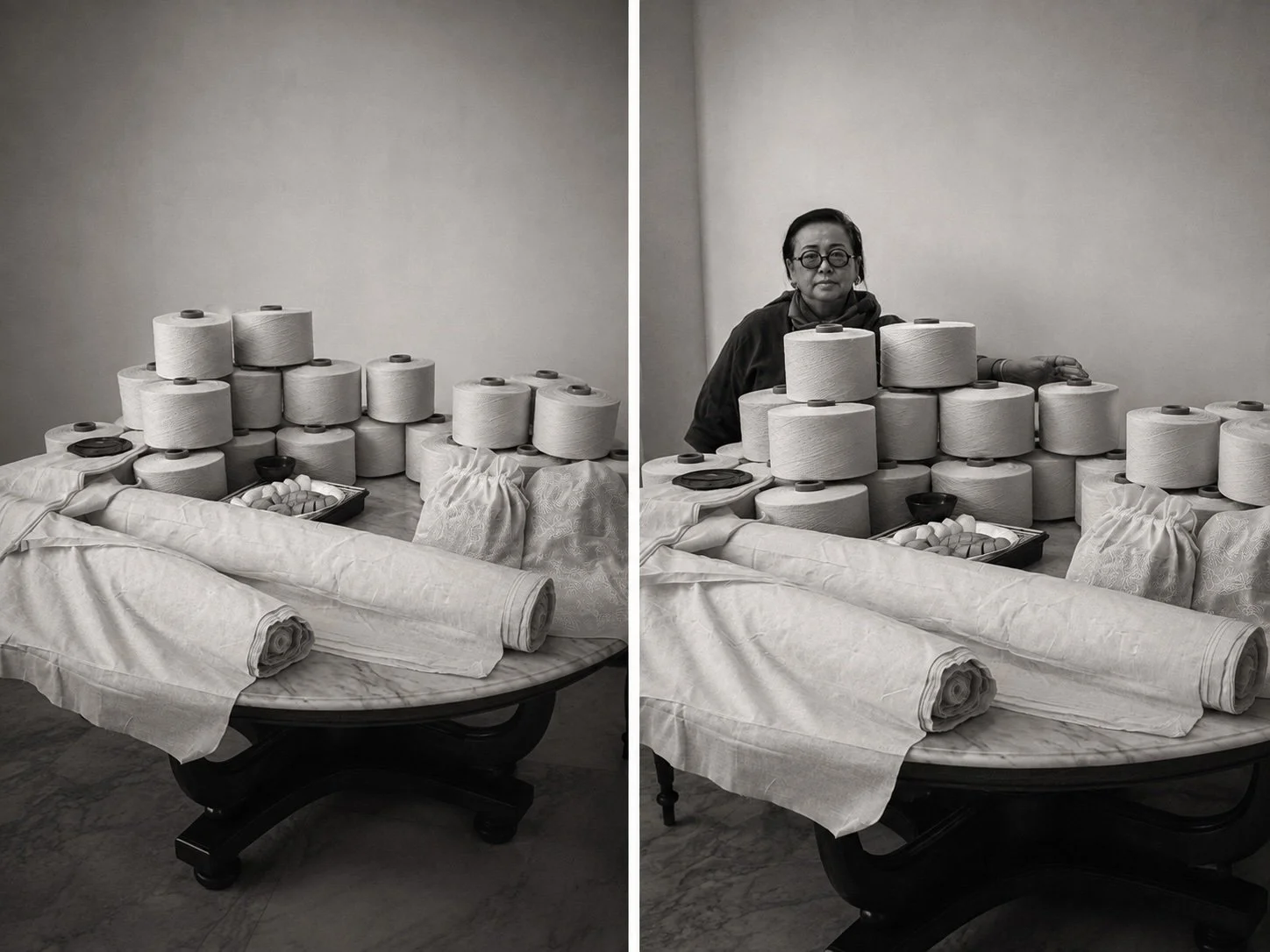
HYPATIA Serat began with a harvest that already existed: pineapple grown for fruit in West Sumatra, with the leaf gathered afterward, redirected from a stream that continues regardless of what HYPATIA chooses to do with it. The material was recognised, in something already happening, and then developed — over years of fibre testing, weave structure work, and natural dye experimentation — into something that could perform reliably as cloth.
That origin carries its own kind of justification. A material already present in a working agricultural cycle answers the question of purpose before the first prototype exists. The pineapple harvest happens either way;
HYPATIA's work is what the leaf becomes afterward.
Traceability, Built In
The industry is also moving, this year, toward taking material origin seriously as a matter of infrastructure. The EU's Digital Product Passport, tied to the broader Ecodesign for Sustainable Products Regulation, is now live as shared registry infrastructure, designed to make material composition, origin, and life-cycle information travel with a product from the start.
HYPATIA's documentation practice has answered these questions from the beginning: which harvest, which village, which hands a specific length of cloth passed through on its way to becoming a garment. The industry is building infrastructure to formalise that answer for everyone. HYPATIA has held itself to it since 2020.
What Purpose Actually Looks Like
Spectacle asks what can be made that's never existed before. HYPATIA's material philosophy asks what already exists, quietly, and deserves the years of attention it takes to become something lasting. Both paths can produce extraordinary textiles. Only one of them begins with a harvest already underway, and a name for the leaf already gathered.
Further reading
WWD, on Inside Out and Matteo Ward's perspective on material innovation: wwd.com/sustainability/business/inside-out-suzy-amis-cameron-sustainable-fashion-1238408646
WWD, on Balenciaga's AMSilk-based couture piece: wwd.com/sourcing-journal/sustainability/material-world-balenciaga-amsilk-melon-leather-inditex-hyosung-fungi-sorona-1239098606
On the EU's Digital Product Passport and ESPR: intnews.it/en/fashion-tech-2026-ai-design-smart-fabrics-dpp